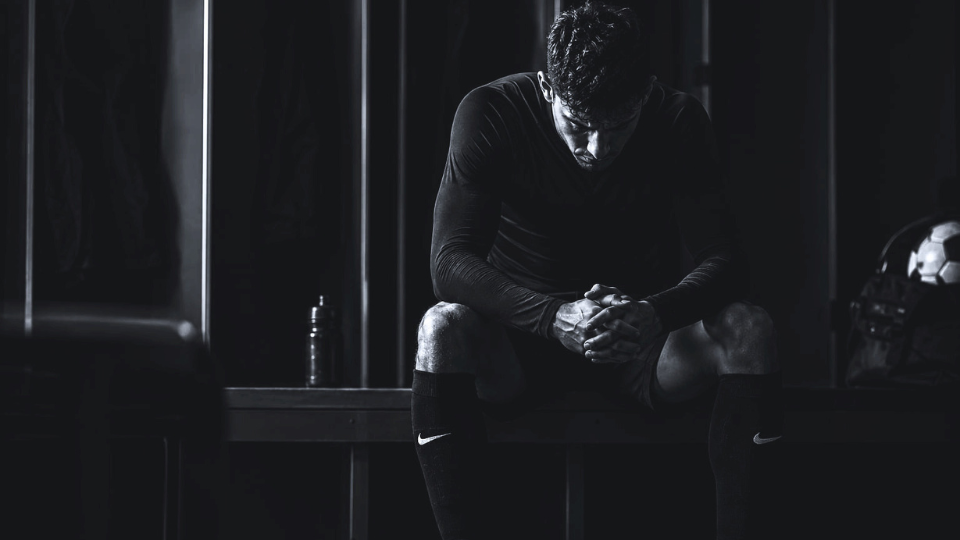
This is part two of a piece I started with a story about a player who messaged me after a game he'd played well in. Ninety minutes, no mistakes, and still, in his own words, something felt off. In part one, I worked through why that happens - not because football took up too much of his world, since plenty of players with football as their entire world, Ronaldinho, Messi, Neymar, never lose their freedom at all. The real difference is whether you're still holding the game with an open hand, or whether your grip on it has quietly closed. If you haven't read that part yet, it's worth starting there. This picks up right where it left off: where that grip actually starts tightening, and what it looks like once it has.
Go back far enough and you'll usually find the same thing. A kid gets attention and praise mostly when he's playing well. Not always on purpose - that's just how academies, youth teams, and, honestly, a lot of football parents work. Do well, get noticed. Do badly, get quiet, get shouted at or get cut from the team once and for all. Mistakes get punished and along the way we have learned that the best don't make mistakes.
That's the exact moment a freely chosen love for the game can start turning into something pressured. The brain is very good at picking up patterns like that early, and running with them for the next fifteen years without anyone checking whether the pattern still makes sense. So you end up with grown men and women who are technically excellent, playing like every mistake might get them cut from the group - because for a long time it actually did.
Here's a small example I use a lot, because I think it explains more than most of the theory does.
A player gets the ball with a forty-yard switch on. Ten years ago, before any of this fear built up, he'd have hit it without thinking twice. Now something in him hesitates, just for half a second - and in that half second, he's already given it sideways instead. Five yards, safe, nothing on it. In training he pulls off that long pass easily. In the game, he goes quiet. And after a while he even stops doing it in training.
He'll walk off after the match and someone will say he had a tidy game, didn't give the ball away much. In a way, that's true. But he knows, and I know when I watch it back with him, that a tidy game, a good game and a standout performance aren't the same thing. Instead of playing up to his full potential he was protecting himself.
That instinct is very well trained in most of us, and it's very human too. Ten years of hearing "don't lose the ball" will do that to anyone. We fear few things as much as being cut from our group or not belonging anymore - so we will do anything to protect it.
This is the part I think gets skipped over most. Under real pressure, your attention physically narrows. Not metaphorically. Sport scientists like Sam Vine have tracked this with eye-tracking equipment: under pressure, athletes' eyes fixate longer on fewer cues, and they're slower to pick up the information that actually matters on the pitch. Separate research on choking under pressure (Englert and colleagues) shows anxiety pulls attention inward, toward self-monitoring - toward "am I doing this right" - and away from what's happening around you.
So a player who looks like he's making a bad decision under pressure might genuinely not be seeing the same picture he sees without feeling that pressure. He's not seeing the full pitch. He's seeing a tunnel with a pair of boots at the end of it, and part of his brain is busy watching those boots instead of scanning for the switch.
Telling that player to "just relax" doesn't do much, because you're talking to a nervous system, not a personality flaw.
Underneath all of this sits another piece, confidence, and how it actually gets built rather than just talked about. That's a big enough topic that it deserves its own space rather than a rushed paragraph here, so I've written a separate piece on exactly that: how confidence actually gets built. If you want the deeper, step-by-step version, that's also most of what my upcoming book on confidence for soccer players works through in full.
People assume free players don't feel any pressure. They do, and they still care deeply - sometimes more than the ones who look tight. The difference isn't that they have nothing on the line. It's what happens in their system, and to their confidence, when the pressure shows up. After a lost ball, they ask for it again straight away instead of disappearing for ten minutes. After a missed chance, they go again.
That's something you're largely born with. Just think back to yourself as a little kid learning to walk. You probably can't remember much of it, but you know from observation that kids don't care if they fall or "make a mistake" in the process. They don't tie it to their self-worth either, because luckily they haven't developed the brain capacity yet to build belief systems based on their parents' feedback. They don't understand yet what it means when mum or dad roll their eyes when they trip again, or when they get laughed at. They literally don't have the capacity to feel like something such as reputation is on the line for them.
The older we get, the more we tend to close our hand around what we've earned, the harder we grip. It almost seems like the older we get, the harder this becomes, because we only have more and more to lose - or at least we believe so, because we've started to believe that what we've earned or acquired is actually real and important.
Close your eyes for a second. Take a breath in, hold it, and make a fist. Squeeze it as hard as you can and keep holding.
That's the state most footballers are trying to play in. Held breath, clenched hand, everything locked tight, waiting for it to be over. Now ask yourself honestly: how well can you actually perform like that? How much can you feel the ball, read the game, react to what's actually happening in front of you, when your whole body is busy holding on?
Flow works the opposite way. Open hand, easy breath, nothing gripped. That's not a mood you talk yourself into, it's simply what's left once you stop clenching. We forget that in flow states, everything comes naturally, because nothing's being held onto in the first place. This life was never about achieving more and then white-knuckling it so nothing gets taken away. It's about growing more and making new experiences. The only way to live a fulfilled life is to keep making new experiences and keep growing until we're old, and you can't grow with your fist closed.
So ask yourself: how much can you grow, and how many new experiences - even the bad ones, which matter just as much - can you make, when you're too busy holding on to take any risks at all?
Thinking back to that player who told me he felt off despite making no mistakes, I understand it differently now. It was never that football only took up too much of his world. It was that somewhere along the way, without him noticing, his grip on it had closed. What used to be his got quietly repossessed by fear of losing it.
So in the sessions that followed, we worked on getting his nervous system to open the fist again slowly and rediscover the ability to enter flow states again. We also focused on figuring out what he wanted to bring onto the pitch as non-negotiable values, no matter the result, no matter who was watching. And we went back to what still motivated him, deep down, before any of this pressure built up, and what that meant for where he actually wanted to go.
Because here's what I've learned. If your goals and your dreams are bigger than your fears, you keep moving forward. You keep growing. And that tight grip, the one that told him he wasn't enough after a clean ninety minutes, loosens a little more every time you choose the dream over it.
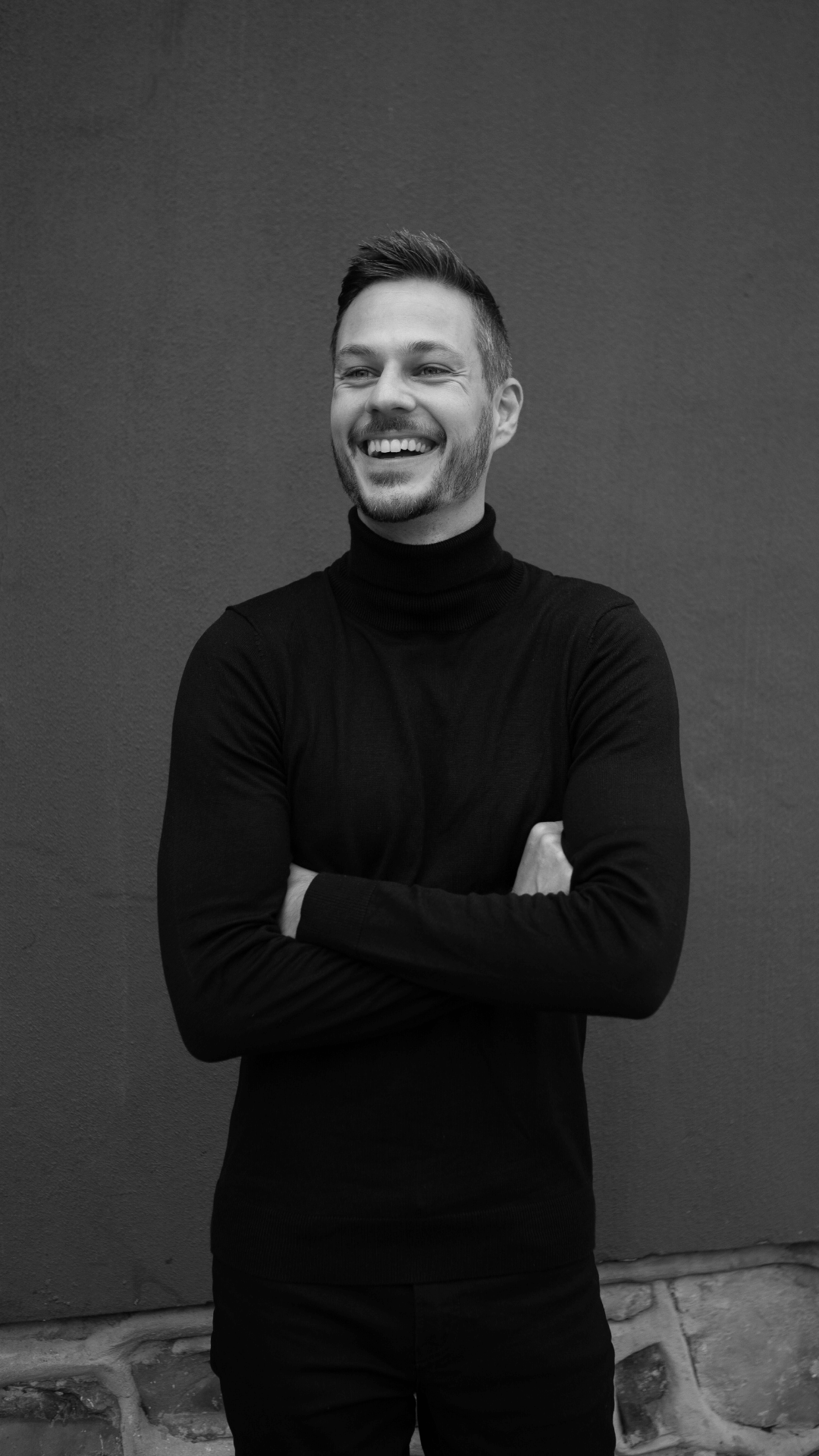
STEFAN PETER - THE HEAD COACH & AUTHOR
I'm Stefan Peter - mental performance coach for professional soccer player/footballers.
I got scouted by Manchester United as a kid. At 17 I had my pro trial with Leyton Orient - and froze. Not because I lacked talent. Because nobody had ever taught me what to do with my own head under that kind of pressure.
That moment built everything I do today.
I work with pro players and coaches on the layer of the game most coaching never addresses - nervous system control, subconscious autopilot patterns, and a personalised mental gameplan built around how you are specifically wired as a footballer.
Not generic mindset tips. The work that actually changes what happens on matchday.
Trained in High Performance Sport Psychology at FC Barcelona · MAS in Sports Health and Leadership · Advanced Breathwork Coach

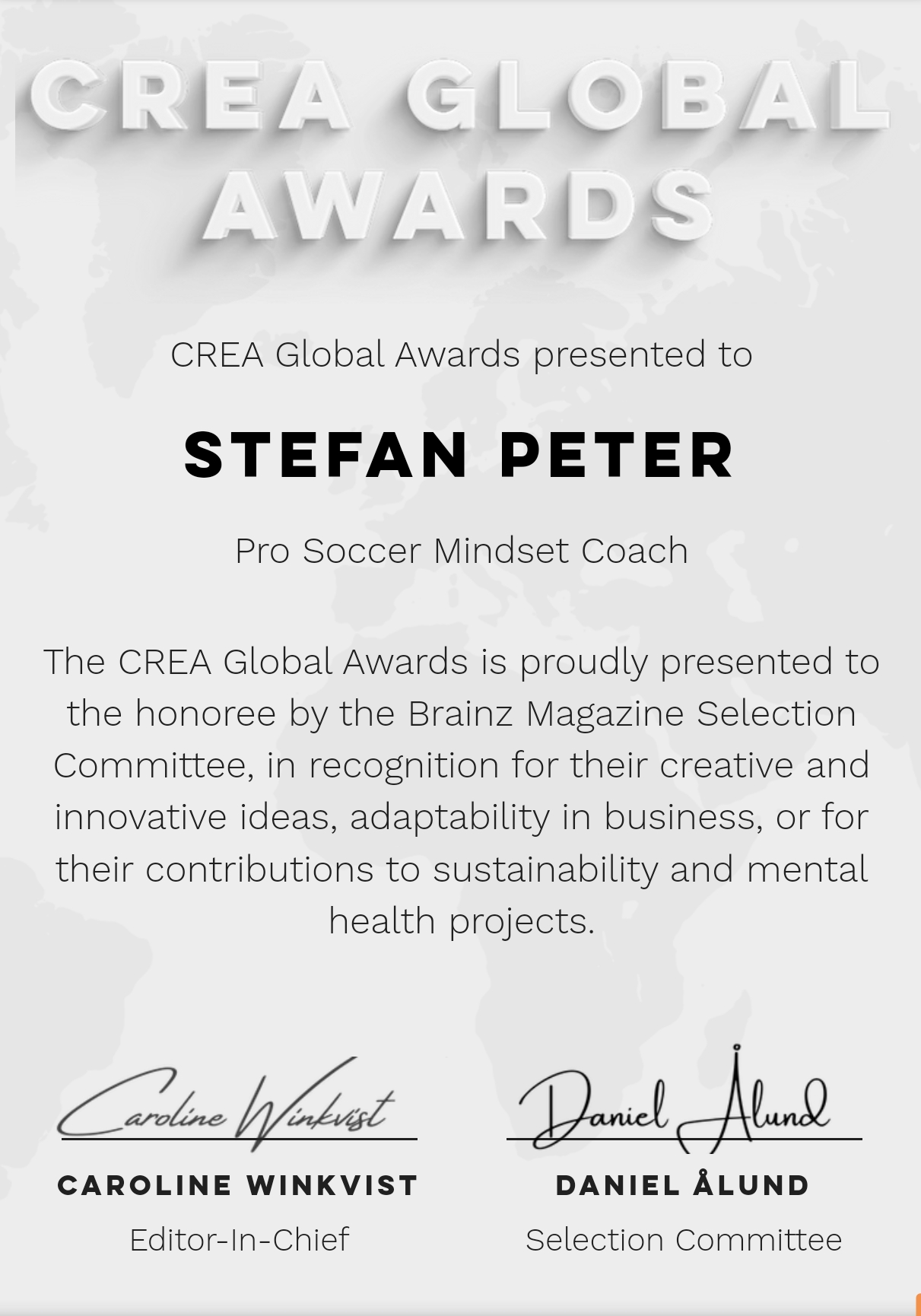
More articles

STEFAN PETER - THE HEAD COACH
Working with players and coaches at FC Bayern München Women's · Gotham FC · Bournemouth FC
© Copyright 2026 - All rights reserved | Stefan Peter Coaching LLC
office@stefanpetercoaching.com